This section compares practices across the frozen corpus without treating every institution, webpage, or practitioner as an independent confirmation.
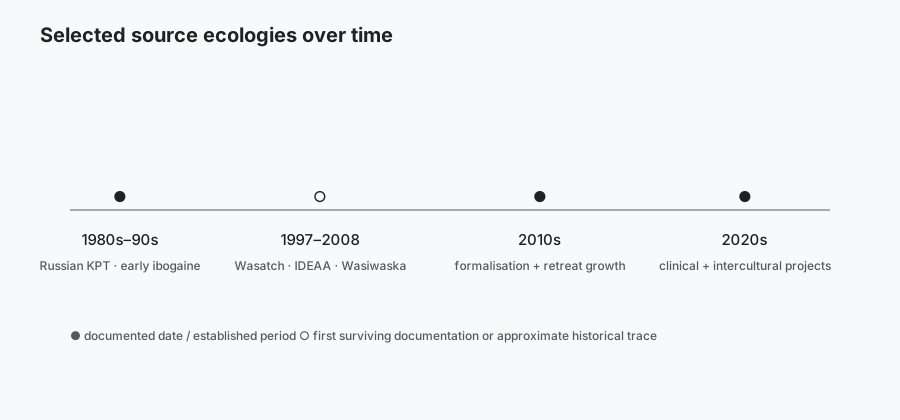
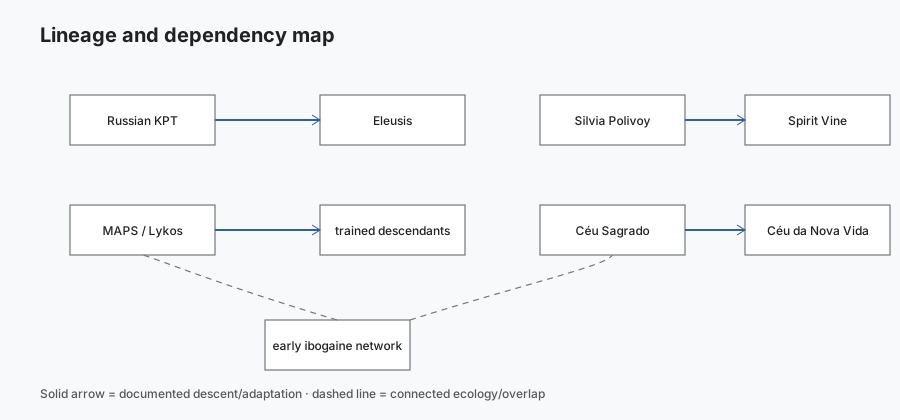
A source family can contain many pages while still contributing only one recurrence. Connected lineages are also kept connected: the Russian KPT programme and its Eleusis adaptation are not two independent origins; Silvia Polivoy's early Ayahuasca Healing work and her later Spirit Vine work belong to one practitioner lineage; early DASH/INTASH, Slovenian, MindVox, Iboga Therapy House and related ibogaine actors form a densely interconnected ecology; MAPS-trained descendants are not separate origins of the MAPS model. [1]
The recurrence labels used below mean:
- Strong cross-ecology recurrence: substantially similar practice appears in several historically or institutionally distinct ecologies.
- Moderate cross-ecology recurrence: appears in several distinct settings, but unevenly or with important differences.
- Contested / divergent: the underlying issue recurs, but sources resolve it in substantially different or opposed ways.
- Emerging: suggestive recurrence exists, but the frozen corpus is too thin or terminologically heterogeneous for a stronger claim.
These labels describe the corpus, not therapeutic effectiveness.
Pattern 1 — The substance is repeatedly embedded inside something larger
Cross-ecology recurrence: strong
Recurring source language
Across otherwise different settings, relevant wording includes:
- “tripod”
- “preparation, participation, and integration”
- “primary intervention, with psychedelic therapy provided as an adjunct”
- “amplifier and therapeutic catalyst”
- “not … psilocybin in isolation”
- “psyche, body, and life context”
- “Ketamine is not a cure”
- a “window for therapy, lifestyle change, and continued psychiatric care”
- intake / psychological process / aftercare
These phrases are not interchangeable theories. Their common feature is narrower: the psychoactive substance is explicitly placed inside a wider structure rather than consistently being presented as the whole intervention.
Source observations and origins
One of the earliest established programmes in the corpus, Takiwasi, founded in 1992 in Tarapoto, Peru, describes its addiction-treatment model as a therapeutic “tripod” combining Amazonian medicine, psychotherapy and community living/work. Its Amazonian component itself contains more than ayahuasca: purgatives, dietas and related practices are part of the programme. Takiwasi is a formal residential treatment/research centre drawing on Amazonian mestizo vegetalismo and Western clinical/psychotherapeutic practice. [2]
The Russian Ketamine Psychedelic Therapy lineage supplies a separately developed clinical example. By 1997, Evgeny Krupitsky was already reporting an eleven-year history of ketamine treatment for alcohol dependence in St Petersburg. KPT descriptions place preparatory psychotherapy before ketamine and subsequent psychotherapy afterward, with the latter directed toward bringing material from the experience into ordinary life. MAPS began supporting part of the heroin-dependence research in 1997, but the KPT lineage itself clearly predates that funding. [3]
The early European ibogaine self-help ecology developed a parallel structure without originating in either of those systems. Historical DASH/INTASH material separates intake, psychological aspects and aftercare, while later Wells/Kroupa writing focuses explicitly on relapse, psychological and social aftercare, and the limitations of treating ibogaine as a one-treatment solution. These actors were heavily connected with one another and therefore count here as one broad early-ibogaine ecology, not numerous independent confirmations. [4] [5]
The formal MAPS/Lykos MDMA-assisted psychotherapy model later made preparation and follow-up essential parts of a manualised PTSD treatment rather than treating MDMA administration alone as the intervention. [6]
More unusually, Roots to Thrive, developed in British Columbia from 2018, states that its structured Community of Practice was the “primary intervention,” with psychedelic therapy provided as an adjunct; ketamine is described as an “amplifier and therapeutic catalyst.” The programme emerged from a quality-improvement initiative and the frozen protocol records an initial partnership between a Canadian university and a regional health authority, with author affiliations including Vancouver Island University and UBC. [7]
The same general positioning appears in a different modern psychiatric ecology at OVID Clinics in Berlin. Its 2025 compassionate-use psilocybin programme explicitly says treatment is not psilocybin in isolation and describes a multiprofessional approach attentive to “psyche, body, and life context.” The programme operates under Germany's BfArM framework, with psilocybin supplied by Filament Health; an exact role previously attributed to the Central Institute of Mental Health Mannheim remains to be reverified before publication. [8]
At Parklands Mindcare Centre in Nairobi, ketamine is embedded in an otherwise conventional psychiatric practice. The centre states that “Ketamine is not a cure” and can create “a window for therapy, lifestyle change, and continued psychiatric care.” Its programme has operated since 2019 and is associated with Dr Alphonce Nabiswa, whose earlier work was linked to Aga Khan University Hospital Nairobi. [9]
Independent recurrence
This basic structure appears separately in:
- Amazonian residential addiction treatment;
- Russian ketamine psychotherapy;
- early peer-led ibogaine treatment;
- formal MDMA/PTSD research;
- contemporary group-based ketamine treatment;
- contemporary European psychedelic psychiatry;
- conventional Kenyan psychiatric ketamine practice.
The recurrence is therefore not dependent on one drug, one diagnosis, one continent or one professional tradition.
Patient/problem backgrounds
The relevant populations are correspondingly varied: alcohol and heroin dependence; other substance-use disorders; PTSD; healthcare workers with PTSD/depression; treatment-resistant depression; and severe treatment-resistant psychiatric illness.
Variants and counterexamples
The meaning of the surrounding structure differs substantially.
At Takiwasi it includes Amazonian plant practices and communal work. In KPT it is structured psychotherapy. In Roots to Thrive it is explicitly a group Community of Practice. In OVID it is multiprofessional psychiatric and psychotherapeutic care. At Parklands it resembles conventional psychiatric continuity.
KRIYA Institute / Raquel Bennett complicates the pattern further by distinguishing biochemical/medical ketamine treatment from psychotherapeutic/psycholytic and psychedelic ketamine paradigms. “Ketamine therapy” is therefore not treated even within the ketamine field as a single treatment form. [10]
Conversely, South Island Ketamine Clinic represents an informative boundary case: its public-facing material is substantially more medical and exposes relatively little psychotherapy choreography. [11]
Higher-order observation
Observation: The most defensible cross-source statement is not that these systems agree on what the larger treatment should contain. They plainly do not.
What recurs is the weaker but broad observation that many mature or structured programmes do not describe the psychoactive substance as sufficient by itself. The surrounding treatment architecture changes radically by ecology.
Related: Preparation · Post-session processing · Re-entry
Pattern 2 — Preparation before the substance-assisted state
Cross-ecology recurrence: strong
Recurring source language
The corpus uses:
- preparation
- psychoeducation
- intentions / intention-setting
- goals
- expectations
- personal history
- risks / benefits
- safety contract
- vulnerabilities
- intake
- screening / application
The sources do not define “preparation” identically.
Source observations and origins
Russian KPT is again among the earliest formal examples in the corpus. Preparatory psychotherapy and education precede ketamine treatment in Krupitsky's model. [3]
The early ibogaine ecology likewise distinguished intake from treatment and aftercare. DASH/INTASH material survives through historical self-help documentation and Geerte Frenken's case material. [4]
In the 2004 Wasatch Front underground MDMA network, preparation was unusually explicit. The patient described in “Dr Jane's” case had gone through six earlier preparation sessions in which goals and a safety agreement were developed; the preparation also covered risks and benefits, expectations and how subsequent material would be handled. The practitioners were underground, although they were otherwise licensed psychologists, social workers or psychiatrists. [12]
Friederike Meckel Fischer's underground Zurich psycholytic practice included psychoeducation before a first drug-assisted session and sober intention/sharing work before medicine sessions during group weekends. Her practice came from the Swiss psycholytic lineage and additionally drew on Holotropic Breathwork and Family Constellation work. [13]
Among Amazonian retreat organisations, the Ayahuasca Foundation explicitly divides its educational material into “preparation, participation, and integration,” with personal history, intention-setting and practical preparation represented in the pre-retreat material. [14]
Modern trauma-oriented programmes often enlarge this phase. Tandava describes a seven-week container for women recovering from sexual trauma, beginning with two weeks of preparation before its residential phase. [15]
Evolving Temple, a much smaller and largely self-authored practitioner source, advertises four individual preparation sessions across six weeks before its residential work. [16]
Equanimity Wellness in Johannesburg describes preparation/intention work before medically supported ketamine, including life story, vulnerabilities and psychological patterns. An earlier-pass note that specifically used the words “defense mechanisms” was not reverified and therefore should not be quoted as source wording. [17]
Formal referral programmes show the same basic phase. Heroic Hearts Project, founded in 2017, describes screening/application, preparation, retreat participation, integration and later alumni/community support for veterans. It is a referral/programme organisation rather than one clinic, so practices originating with its external providers should not be attributed to Heroic Hearts itself. [18]
Independent recurrence
Preparation appears across:
- Russian clinical ketamine psychotherapy;
- European peer-led ibogaine networks;
- underground American MDMA psychotherapy;
- Swiss psycholytic psychotherapy;
- Amazonian retreat education;
- contemporary trauma-focused 5-MeO-DMT retreats;
- modern ketamine psychotherapy;
- veteran referral programmes.
Patient/problem backgrounds
The relevant populations include alcohol/heroin dependence, PTSD, childhood physical/sexual abuse, psychotherapy clients who had become “stuck,” sexual-trauma survivors, broader retreat participants and veterans with PTSD/TBI-related problems.
Variants and disagreements
Preparation ranges from:
medical/suitability preparation — assessment, screening and risk management;
psychotherapeutic preparation — history, goals, vulnerabilities, alliance;
experiential preparation — learning what altered states may involve;
ritual/practical preparation — dietary, behavioral or logistical restrictions;
social preparation — arranging trusted support and aftercare.
These should not later be treated as equivalent merely because all occur before substance administration.
Institutional/funding notes
Krupitsky's heroin work received MAPS support beginning in 1997, but the preparation-containing KPT lineage predates that relationship. Roots to Thrive subsequently developed within a university/regional-health partnership. Heroic Hearts works through outside provider partnerships rather than originating one preparation method. [3] [7] [18]
Higher-order observation
Observation: Preparation is one of the broadest cross-ecology recurrences in the corpus, but the word conceals different jobs.
The commonality is temporal: substantial activity occurs before the altered state. What that activity is expected to accomplish differs sharply by lineage.
Pattern 3 — Screening, selection and suitability
Cross-ecology recurrence: moderate to strong
Recurring source language
- intake
- application
- assessment
- screening
- medical screening
- risks / benefits
- carefully selected clients
- suitability
- medical supervision / monitoring
Source observations and origins
The Wasatch practitioners did not describe indiscriminate access; the contemporaneous 2004 article presents their MDMA work as occurring with carefully selected psychotherapy clients, preceded by several sober sessions and discussion of risks and benefits. [12]
Early peer-run ibogaine material likewise developed intake structures despite operating outside conventional medicine. DASH/INTASH documentation explicitly separates intake from psychological work and aftercare. [4]
A contrasting medical branch appeared at Healing Visions Institute, opened in St Kitts in October 1996 under Deborah Mash. Its model centered medically monitored addiction treatment and cardiac/clinical oversight. Mash was University of Miami faculty, but contemporaneous reporting did not treat the university as simply operating the clinic. [19]
Contemporary Amazonian-facing retreat organisations also incorporate biomedical selection. Etnikas describes explicit medical screening and physician/nursing oversight alongside ceremonial and psychological work. [20]
The Temple of the Way of Light currently discusses depression, anxiety and trauma history as suitability considerations and combines Shipibo healing with medical/psychological screening and Western facilitation. [21]
Ambio's veteran cohort was treated in a medically monitored ibogaine/5-MeO-DMT provider setting studied in collaboration with Stanford researchers. The study population consisted of U.S. Special Operations veterans with TBI histories and associated PTSD/depression/anxiety symptoms. [22]
In Nairobi, Parklands uses psychiatric assessment and monitored IV/IM ketamine within conventional mental-health care. [9]
Independent recurrence
Selection/screening practices appear separately in:
- underground psychotherapy;
- early peer-run ibogaine networks;
- offshore medical ibogaine treatment;
- Amazonian retreat settings;
- contemporary research-linked ibogaine treatment;
- conventional psychiatric ketamine practice.
Patient/problem backgrounds
This spans PTSD/childhood abuse, opioid/cocaine dependence, broad retreat populations, Special Operations veterans and severe treatment-resistant psychiatric conditions.
Variants and counterexamples
The strongest divergence is between psychological selection and medical screening.
An underground therapist may select for an established therapeutic relationship and perceived psychological readiness. A medically supervised ibogaine programme may prioritize physiological risk and cardiac monitoring. Contemporary retreat programmes frequently combine both.
Some sources expose too little screening choreography to infer a structured suitability process. Absence from public-facing material is not evidence that screening is absent.
Higher-order observation
Observation: Selection appears across both formal and fringe settings, but the criteria of suitability are ecology-specific. The existence of screening should not be confused with agreement about what makes somebody suitable.
Pattern 4 — Relational safety, trust, accompaniment and containment
Cross-ecology recurrence: strong
Recurring source language
- trust
- therapeutic alliance
- empathetic presence / listening
- “containing element”
- supportive presence
- trusted friend / relative
- reassurance
- “Holding Space”
- safety
- continuity
Source observations and origins
The 2004 Wasatch case included not only a therapist but a plan for a trusted friend or relative to take charge afterward. This sat alongside the pre-existing therapist relationship and six preparatory sessions. [12]
In Vancouver, Andrew Feldmár's 2007–08 writings described psychotherapy clients asking him to accompany psychedelic experiences so that he could help keep them safe or guide them. His private work was relational/existential rather than part of a clinic protocol, and later formal MAPS involvement should be separated chronologically from these earlier accounts. [23]
Fischer's Zurich practice gives a different formulation. Her husband Konrad was described as a comparatively passive observer whose presence contributed a “containing element.” [13]
The formal MAPS/Lykos model explicitly emphasizes the therapeutic alliance, trust, empathic presence and listening. [6]
The Temple of the Way of Light uses contemporary language of trust-based, non-intrusive support, grounding, consent/boundary awareness and “Holding Space and Non-Intervention.” It also states “No pressure to ‘go deeper’ or process beyond your capacity.” That language is current and should not be projected backward onto the centre's earlier years. [21]
Emerge Clinic represents continuity in another form: Paul Gibson is described as maintaining the psychotherapeutic relationship across preparation, the ketamine session and integration while prescribing/medical responsibilities remain separate. [24]
Informal material independently reproduces the importance of a known other. The 2001 experience later published by Erowid as “Healing My Posttraumatic Stress Disorder” occurred in a comfortable home with three close friends; a sober friend provided reassurance during panic. This documents one participant's experience, not efficacy. [25]
Independent recurrence
Relational support appears in:
- underground MDMA psychotherapy;
- independent existential psychotherapy;
- Swiss psycholytic psychotherapy;
- formal MDMA/PTSD research;
- Amazonian retreat facilitation;
- modern ketamine psychotherapy;
- amateur experience reports.
Patient/problem backgrounds
PTSD, childhood abuse, fear/shame/mistrust, “stuck” psychotherapy, broad retreat participation and CPTSD-oriented clinical work all appear in sources contributing to this pattern.
Variants and disagreements
The role of the other person ranges from:
- active psychotherapist;
- mostly silent/containing observer;
- non-intrusive facilitator;
- ritual healer;
- sober friend;
- continuous home psychotherapist;
- peer/community member.
Therefore “relational safety” is an analytical cluster, not a claim that all these relationships perform the same function.
Higher-order observation
Observation: A supportive human relationship is one of the most portable practices in the corpus: it appears despite major disagreements about drugs, metaphysics and psychotherapy.
What does not recur is a single answer to how active that person should be. That divergence is the subject of the next pattern.
Pattern 5 — Facilitator activity during the altered state: non-directive, responsive, active, ritual and medical models
Cross-ecology recurrence: contested / divergent
This is less a single recurring method than a recurring decision point that different traditions resolve differently.
Recurring source language
At the low-directiveness end:
- “Holding Space and Non-Intervention”
- “No pressure to ‘go deeper’”
- non-directive / supportive
- “invitation rather than direction”
- participant as “the source of their own healing”
- inward / self-directed
At more active ends:
- intensive psychotherapy
- probing questions
- group sharing / workshops
- healer diagnosis
- individualized icaros
- ritual teaching / “Fire Talk”
- somatic/interactional intervention
Source observations and origins
The formal MAPS/Lykos manualized model explicitly describes therapist suggestions as “invitation rather than direction” and speaks of the participant as “the source of their own healing.” [6]
The Temple currently describes “Holding Space and Non-Intervention,” while still operating inside a Shipibo ceremonial environment in which healers may diagnose during an early ceremony and use individualized icaros, energetic protection and plant practices. Thus psychological non-intervention and ritual activity can coexist in the same organisation. [21]
MycoMeditations describes acute support as non-directive/supportive, even while staff come from depth, somatic, IFS, mindfulness and transpersonal backgrounds. [26]
The Ambio observational-study setting described the ibogaine period in the earlier pass as primarily inward/self-directed, with eyeshades and staff support as needed. The frozen ledger explicitly requires the detailed coaching choreography to be checked against the Nature/PMC methods before exact wording is used. [22]
The underground material shows more therapist activity. In the 2004 Wasatch case, “Dr Jane” listened and used questions described as lightly probing trauma memories. [12]
Fischer's Saturday sessions are described as medicine combined with intensive psychotherapy, rather than a purely inward session with minimal contact. [13]
Psychedelic Somatic Interactional Psychotherapy (PSIP) provides an explicitly relationally interventionist lineage directed toward trauma, PTSD, dissociative and defensive patterns. Earlier-pass notes contain specific technique descriptions, but those exact eye-contact/transference/autonomic details were not sufficiently re-opened during the freeze and should not be quoted here as verified source wording. [27] [28]
Ceremonial traditions introduce a qualitatively different form of activity. Takiwasi places substances within Amazonian treatment; the Temple describes healer diagnosis and icaros; Bwiti House structures its programme around ceremonies, teaching/reflection and repeated “Fire Talk with Moughenda” sessions. [2] [21] [29]
At another boundary, South Island Ketamine Clinic, Healing Visions and parts of the Parklands model are comparatively medical: the visible role revolves more around assessment, administration, physiological safety and psychiatric follow-up than intensive psychotherapy during the acute drug state. [11] [19] [9]
Independent ecologies represented
- MAPS manualized MDMA psychotherapy;
- Shipibo ceremonial retreat work;
- contemporary psilocybin retreat work;
- underground MDMA psychotherapy;
- Swiss psycholytic psychotherapy;
- PSIP;
- Bwiti/iboga ritual settings;
- psychiatric ketamine care.
Patient/problem backgrounds
PTSD, childhood abuse, “stuck” psychotherapy, trauma/dissociation, addiction, broad retreat participation and mood disorders all appear.
Variants and counterexamples
The corpus does not support a single preferred level of directiveness.
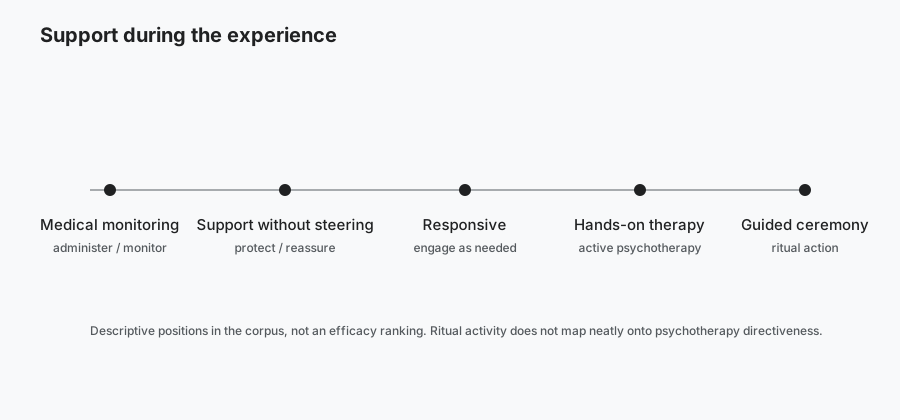
It instead documents several recognizable positions:
- Minimal / protective: remain present and support without directing.
- Responsive: engage psychologically when material arises.
- Actively psychotherapeutic: conduct substantial therapy during the altered state.
- Ritual-active: actively shape the experience through ceremony, song, diagnosis, prayer or teaching.
- Predominantly medical: monitor/administer the drug with comparatively little visible acute-state psychotherapy.
These categories are descriptive labels applied to the corpus; they are not historical terms shared by all sources.
Higher-order observation
Observation: “Substance-assisted therapy” conceals a major unresolved difference about what another person is supposed to do while the substance is active.
The recurrence is the decision point; the answers are divergent.
Pattern 6 — Who determines what the experience means?
Cross-ecology recurrence: moderate and contested
Recurring source language
- “we do not inform our clients on the meaning of their experiences”
- Evolving Temple also presents meaning-making as participant-led; the exact quotation preserved in earlier drafts was not reverified and is omitted here.
- “inner healing intelligence”
- “the source of their own healing”
- guidance when necessary
- personal / cultural / spiritual perspectives
- healer diagnosis
- narrative self
- regression / shadow / transpersonal frameworks
Source observations and origins
The formal MAPS lineage gives considerable authority to the participant through its language of “inner healing intelligence” and the participant as “the source of their own healing.” [6]
Inwardbound, an Irish-founded organisation operating retreats/training in the Netherlands and Costa Rica, states: “we do not inform our clients on the meaning of their experiences.” Its methods page describes guidance when necessary while allowing processing through a participant's own personal, cultural or spiritual framework. [30]
Small practitioner source Evolving Temple also presents meaning-making as participant-led; the exact quotation preserved in earlier drafts was not reverified and is not reproduced here. [16]
Those positions sit beside systems containing stronger pre-existing interpretive frameworks. The Temple describes healer “Diagnosis in the first ceremony” within Shipibo work. [21]
Bwiti House operates inside an explicitly Bwiti-labelled spiritual and initiatory lineage in which repeated Fire Talks, teaching and reflection surround the ceremonies. [29]
Spirit Vine, involving Silvia Polivoy, advertises psychologically/spiritually framed workshops such as “Regression to Childhood,” “Unveiling the Shadow,” and “Transforming the Victim Mindset.” The frozen corpus does not establish that these labels are imposed as mandatory interpretations of individual experiences, so they should be treated as programme frameworks rather than evidence of forced interpretation. [31]
Martie Underwood's public work around Magalies discusses the “ibogaine state of consciousness,” narrative self, integration and peak/transpersonal experience, representing another explicitly interpretive/narrative ecology. [32]
Independent recurrence
Explicit concern with who interprets experience appears in:
- formal MDMA psychotherapy;
- contemporary transpersonal retreat facilitation;
- eclectic small-practitioner work;
- Shipibo ceremonial healing;
- Bwiti-labelled initiation;
- psychologically framed ayahuasca retreats;
- narrative/transpersonal ibogaine work.
Variants and disagreements
The corpus contains a genuine spectrum:
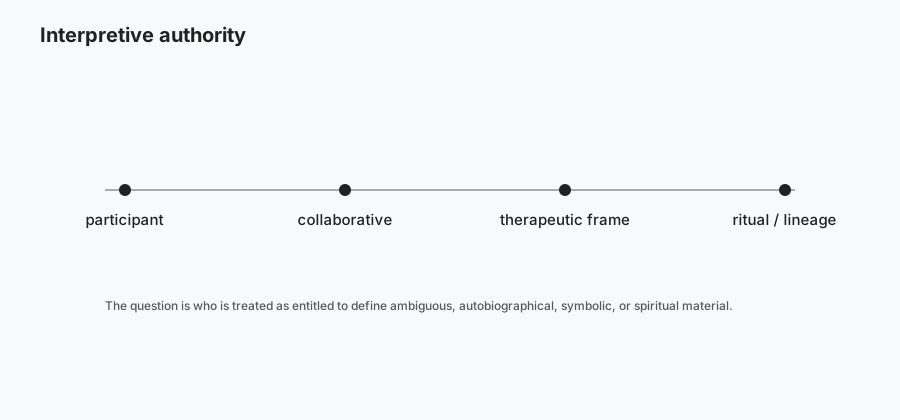
participant-owned interpretation → collaborative psychological interpretation → programme-specific therapeutic frames → traditional/ritual interpretation.
It does not justify ranking these arrangements.
Patient/problem backgrounds
PTSD, broad retreat/self-development populations, addiction and trauma-oriented participants appear in these sources.
Higher-order observation
Observation: The question “who has authority to say what happened?” repeatedly appears beneath very different practice styles.
Some providers explicitly restrict their interpretive authority; others place the experience inside an inherited therapeutic, spiritual or ritual system.
That distinction should remain visible rather than being flattened into the generic word integration.
Pattern 7 — Access, openness, “stuckness,” defenses and overwhelm
Cross-ecology recurrence: emerging / moderate
This pattern requires more caution than preparation or aftercare because the vocabulary is less standardized.
Recurring source language actually preserved
- “stuck”
- “defensive walls”
- psychotherapy becoming “faster” or “deeper”
- “loosened me up behaviorally, emotionally and posturewise”
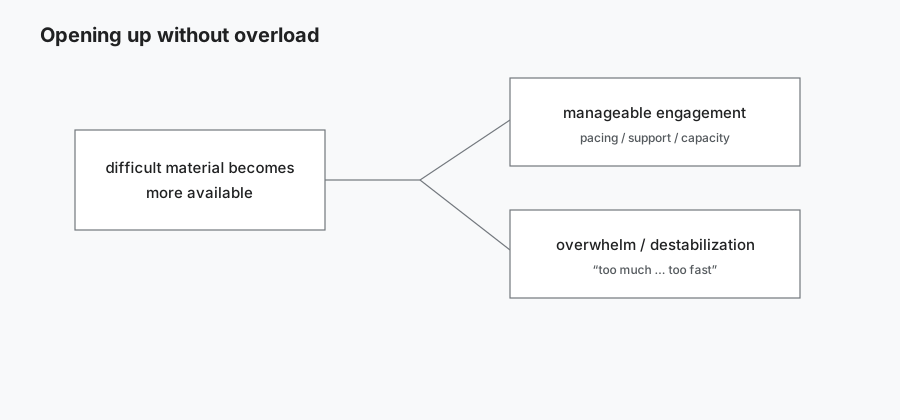
- “too much to deal with too fast”
- processing / deepening awareness of material that arose during or after the drug experience
- dissociative / defensive patterns
The compilation-level label “access” is an analytical convenience; most sources do not use it as a shared technical term.
Source observations and origins
Fischer selected only a small fraction of her ordinary psychotherapy clients for psycholytic work; those clients were described as having become “stuck” or no longer progressing. [13]
The 2004 Wasatch article contains unusually explicit language. “Dr Jane” said MDMA could allow a patient to speak “in spite of any defensive walls they've created.” The patient population described included PTSD and histories of childhood physical or sexual abuse. [12]
Feldmár's public writing said psychedelic experiences could make later psychotherapy faster or deeper, while his broader psychotherapy vocabulary emphasized fear, shame, mistrust and isolation. [23]
An amateur Shroomery participant in 2004, pursuing “regressive self-therapy,” reported that psychedelics had not restored much detailed childhood memory but had “loosened me up behaviorally, emotionally and posturewise quite a bit.” This is unsupervised self-report and cannot be treated as treatment evidence. [33]
The adverse side appears within the same historical amateur corpus. An Erowid report about childhood trauma and MDMA described initially positive effects followed by major emotional and functional difficulty, using the phrase “too much to deal with too fast.” [25]
Psyon's post-ketamine group describes “processing important issues and deepening awareness of content that arose during or after the ketamine experience.” [34]
PSIP's training literature centers trauma/PTSD and dissociative/defensive patterns, although the exact operational techniques preserved in earlier notes require re-opening before quotation. [27]
Independent recurrence
Related descriptions appear in:
- Swiss psycholytic psychotherapy;
- underground American MDMA psychotherapy;
- independent relational psychotherapy;
- amateur psychedelic self-experimentation;
- formal ketamine psychotherapy;
- somatic/interactional psychedelic psychotherapy.
Variants and counterexamples
The evidence does not show that all programmes are trying to “break defenses.”
Some explicitly favor gentle, non-directive pacing. The Temple says there should be “No pressure to ‘go deeper’ or process beyond your capacity.” Tandava uses “voice & choice” and participant pace. [21] [15]
Nor does the amateur material support the idea that accessing more material is intrinsically beneficial: one report describes precisely the opposite.
Higher-order observation
Observation: Several independent sources describe some form of previously difficult-to-reach psychological material or altered flexibility becoming more available.
But the corpus equally preserves a boundary condition: greater access can be experienced as opening or as overload.
That is an observation about reported practice and experience, not an established mechanism.
Pattern 8 — Body, sensation, movement and non-verbal practices
Cross-ecology recurrence: strong at the broad level; highly heterogeneous in form
Recurring source language
- body awareness / expression
- somatic
- embodied
- breathwork
- meditation
- yoga
- movement
- Tai Chi
- grounding
- plant baths
- purgatives
- dietas
- posture
- gardening / manual work
- music / art
There is no evidence that these terms all refer to one theory of “somatic therapy.”
Source observations and origins
Takiwasi's treatment structure contains explicitly bodily Amazonian practices including purgatives and dietas, with restrictions and post-dieta conduct. [2]
The Temple includes plant baths/remedies and grounding alongside Shipibo ceremonial work. [21]
The Ayahuasca Foundation describes purgatives, plant remedies, vapor/plant baths, meditation and yoga alongside ceremonies and counselling/support. [14]
In formal MDMA psychotherapy, the MAPS manual includes body awareness/expression as one component of treatment. [6]
Roots to Thrive names somatic, relational and culturally responsive principles within its group-based ketamine programme. [7]
At OVID, body/movement work sits alongside individual/group psychotherapy, mindfulness/relaxation and art/music approaches. [8]
Tandava explicitly identifies somatic approaches in its sexual-trauma programme. [15]
LaWayra's integration-practitioner material names somatic approaches, somatic release and Somatic Experiencing alongside psychodynamic, parts-oriented and mindfulness work. [35]
Older nonclinical material shows similar breadth without modern somatic terminology. The 2003 Wasiwaska event record lists group sharing, breathwork, artistic/musical expression, body work/yoga and excursions. [36]
The IDEAA material retained from its 2007 text included meditation, yoga, breathing/relaxation, gardening, sport and Tai Chi alongside individual psychotherapy and ayahuasca. Those timetable details are V2 because the full PDF could not be reopened line-by-line during the freeze. [37]
The 2004 Shroomery self-report independently used the nonclinical phrase “posturewise” when describing perceived changes. [33]
Independent ecologies
- Amazonian treatment centres;
- Shipibo retreat work;
- formal MDMA psychotherapy;
- contemporary ketamine group treatment;
- psychiatric day-clinic treatment;
- trauma-specific 5-MeO-DMT retreats;
- ayahuasca integration practice;
- early experiential/research seminars;
- addiction communities;
- amateur experience reports.
Patient/problem backgrounds
Addiction, PTSD, sexual trauma, treatment-resistant depression, broad retreat populations and self-directed childhood-trauma work all contribute.
Variants and disagreements
At least four very different categories are present:
- formal somatic psychotherapy/body awareness;
- movement, breath, yoga, Tai Chi and grounding;
- Amazonian bodily/plant practices such as purgatives, baths and diets;
- ordinary embodied activity such as gardening, labor or exercise.
The fact that all involve the body does not make them one method.
Higher-order observation
Observation: Non-verbal and bodily practices recur extremely widely, but their theories, functions and cultural origins differ too much to collapse them into a single “somatic” intervention.
The strong recurrence is at the level of embodiment, not a single somatic doctrine.
Pattern 9 — Group, community, family and social context
Cross-ecology recurrence: strong
Recurring source language
- group
- group sharing
- sharing circles
- Community of Practice
- mutual help
- community living
- family / relationships
- family/social networks
- alumni/community
- health promoters
- communal meals
- communal work
Source observations and origins
Takiwasi's 1992-founded residential model explicitly includes community living/work alongside Amazonian medicine and psychotherapy. [2]
Fischer's underground Zurich treatment developed into a monthly weekend group process. Friday involved sober sharing and intention, Saturday medicine-assisted psychotherapy, and Sunday sober integration; individual sober psychotherapy could continue between weekends. [13]
Historical Amazonian/Brazilian examples also make the social setting visible. Silvia Polivoy's 2004 Manaus programme included workshops and group sharing around several ayahuasca ceremonies. [38]
Wasiwaska's 2003 event trace similarly describes integrative group sharing and communal activities. [36]
Caminho de Luz, formally founded in 2001, combines mutual-help meetings, individual attention, spirituality, educational/recreational work and labour/vocational activities in an addiction-recovery community. [39]
The Slovenian Iboga Foundation went beyond the provider–patient dyad by helping individuals together with family/social networks construct treatment situations. [40]
Contemporary clinical material gives group structure particularly high status at Roots to Thrive: its Community of Practice is described as the primary intervention around which three ketamine sessions are embedded. [7]
Psyon's post-ketamine programme is itself an eight-week group, meeting two hours weekly. [34]
Nierika extends the social layer into community capacity: its Yaqui work includes training community members as health promoters, with collaborations involving the Yaqui Tribe, Nierika and the University of Wisconsin. Its public material also lists Mexican public-health and philanthropic support. [41]
Heroic Hearts includes alumni/community support after veterans return from partner programmes. [18]
The amateur Erowid PTSD account independently places three close friends around the substance experience, with one sober friend providing reassurance during panic. [25]
Independent recurrence
Group/social structures occur independently in:
- Amazonian residential treatment;
- Swiss underground psychotherapy;
- Amazonian retreat workshops;
- Brazilian addiction communities;
- grassroots European ibogaine treatment;
- Canadian clinical ketamine programming;
- Czech ketamine psychotherapy;
- Indigenous/community mental health;
- veterans' support networks;
- amateur participant reports.
Patient/problem backgrounds
Addiction, PTSD/depression, Indigenous/community mental-health needs, “stuck” psychotherapy, veteran difficulties and broad healing populations all appear.
Variants and counterexamples
“Community” may mean:
- a therapy group;
- co-residents;
- family;
- peers recovering from addiction;
- friends;
- a religious congregation;
- Indigenous community structures;
- alumni;
- the wider social world to which someone returns.
These are analytically distinct.
Some modern programmes remain primarily individual. Evolving Temple, for example, emphasizes one-to-one preparation, ceremonies and integration with relatively limited group elements. [16]
Higher-order observation
Observation: The individual-plus-substance dyad is only one recurring unit of practice.
Across several independent ecologies, the meaningful treatment environment expands to include other people who remain present before, during or after the substance experience.
Pattern 10 — Repetition, duration and longitudinal work
Cross-ecology recurrence: moderate to strong
Recurring source language
- repeated sessions
- weekly
- monthly
- multi-week container
- integration over weeks
- aftercare
- follow-up
- repeat treatment
- years
- alumni/community
- “one treatment” critique
Source observations and origins
Fischer provides the clearest longitudinal example. Her group met approximately monthly; average participation was reported as 25 drug-assisted sessions over several years, with sober therapy available in between. She explicitly said “It takes time to get to know and to be with a substance.” [13]
The early ibogaine ecology eventually generated explicit criticism of the opposite model. Wells and Kroupa focused on relapse and the limitations of “one treatment” claims. [5]
A 2003 report on Martin Polanco's Ibogaine Association recorded his own estimate that many people returned for another treatment and quoted him saying: “We still have a lot to learn about how to administer it, how to work with it.” These are founder estimates reported by a journalist, not controlled outcome data, and the clinic belongs to the already interconnected early ibogaine ecology. [42]
Modern programmes often extend treatment temporally even with fewer medicine sessions.
Roots to Thrive uses a 12-week programme containing three ketamine sessions. [7]
Tandava uses a seven-week container: two weeks of preparation, six onsite days and four weeks of integration. [15]
Evolving Temple describes roughly six weeks of one-to-one preparation and six weeks of integration around its residential ceremonies. [16]
Psyon's integration group continues weekly for eight weeks after ketamine. [34]
Inwardbound's facilitator-development model makes a different kind of longitudinal commitment visible: its invitation-only apprenticeship spans three retreats over roughly two to three years and emphasizes “personal maturity, embodied presence, ethical awareness.” This is training evidence rather than patient-treatment duration, but it shows the organisation treating facilitation itself as a capability developed over time. [30]
Independent recurrence
Longitudinal structures occur in:
- Swiss psycholytic psychotherapy;
- early ibogaine treatment/harm reduction;
- contemporary group ketamine therapy;
- trauma-specific retreats;
- one-to-one contemporary retreat practice;
- post-ketamine psychotherapy groups.
Patient/problem backgrounds
Long-term psychotherapy, addiction/relapse, PTSD/depression, sexual trauma and broader healing populations.
Variants and counterexamples
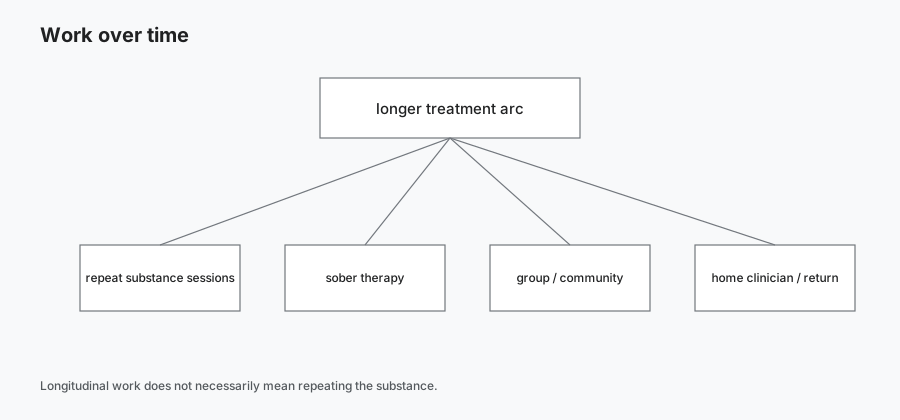
Duration can mean:
- many drug sessions over years;
- few drug sessions within months of sober therapy;
- one retreat surrounded by weeks of contact;
- repeat treatment after relapse;
- continuing group/community involvement.
The corpus therefore does not support equating longitudinal treatment with frequent substance use.
Higher-order observation
Observation: A recurrent counterweight to the “breakthrough session” image is time.
Different ecologies distribute that time very differently, but many mature programmes place substantial therapeutic activity outside the acute drug window.
Pattern 11 — Post-session processing and “integration”
Cross-ecology recurrence: very strong
Recurring source language
- integration
- aftercare
- follow-up
- processing
- group sharing
- written report
- deepening awareness
- individual therapy
- mindfulness
- guided imagery
- art therapy
- practical planning
- reflection
The modern umbrella term integration should not obscure the older vocabulary of aftercare, post-treatment psychotherapy, group sharing or sober follow-up.
Source observations and origins
Russian KPT explicitly includes subsequent psychotherapy directed toward integrating insights from ketamine into everyday life. [3]
Early DASH/INTASH material separates aftercare from intake and the psychological treatment process. [4]
Wells and Kroupa later make post-treatment support central to their reflections on relapse and difficult psychological material, referring to the need for a support or safety net. [5]
Fischer's weekends explicitly reserved Sunday for sober integration, with participants also producing written reports and optionally continuing individual sober psychotherapy. [13]
The MAPS treatment model describes follow-up as essential. [6]
The Ayahuasca Foundation uses the explicit tripartite vocabulary “preparation, participation, and integration.” [14]
Soltara maintains longer-horizon integration/community support; its integration practitioner material incorporates psychodynamic, narrative, somatic, Eastern and “inner wisdom” lenses. [43]
Psyon provides one of the clearest formal contemporary structures: an eight-week post-ketamine group using guided imagery, art therapy, meditation and mindfulness for “processing important issues and deepening awareness of content that arose during or after the ketamine experience.” [34]
OVID's compassionate-use model explicitly includes intensive preparation, treatment and aftercare. [8]
ONE Retreats emphasizes preparation, reassurance/grounding, rest/journaling, therapy/support and practical planning rather than forced interpretation. [44]
Heroic Hearts includes integration and later alumni/community support in its programme path. [18]
Independent recurrence
Post-session work appears across:
- Russian clinical ketamine psychotherapy;
- peer-led ibogaine networks;
- Swiss underground psychotherapy;
- formal MDMA research;
- Amazonian retreat organisations;
- modern Czech ketamine psychotherapy;
- German psychedelic psychiatry;
- contemporary psilocybin retreats;
- veteran referral/community programmes.
Patient/problem backgrounds
Alcohol/heroin dependence, other addiction, PTSD, depression, “stuck” psychotherapy, broad retreat populations and veterans.
Variants and disagreements
The post-session phase can include very different activities:
- immediate sharing;
- sober psychotherapy;
- group processing;
- interpretation;
- meditation/mindfulness;
- artistic work;
- journaling;
- practical planning;
- relapse prevention;
- continued psychiatric care;
- community involvement.
These functions should not later be reduced to one vague category.
Higher-order observation
Observation: The broad recurrence of post-session work is extremely strong, but the corpus suggests that integration is better treated as an umbrella for several distinct activities than as one intervention.
Related: Meaning authority · Re-entry
Pattern 12 — Ordinary life, aftercare, social environment and re-entry
Cross-ecology recurrence: strong
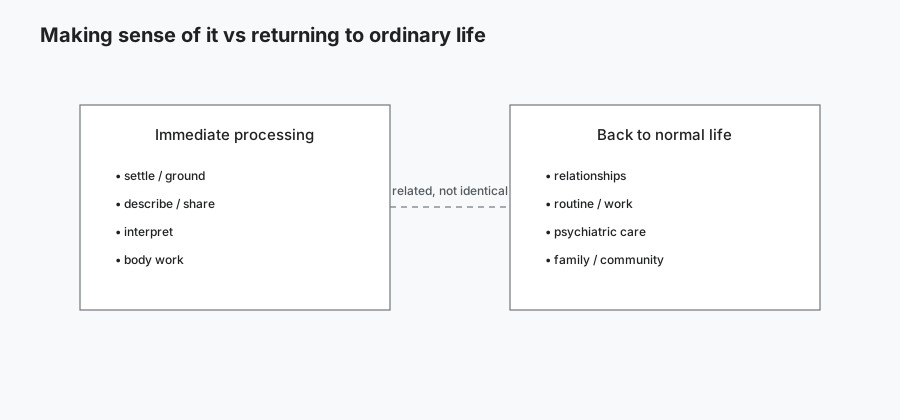
This pattern overlaps with post-session processing but is kept separate because many sources move beyond discussing the experience itself and address the person's ongoing life.
Recurring source language
- everyday life
- aftercare
- relapse prevention
- family / relationships
- practical planning
- lifestyle change
- continued psychiatric care
- home practitioner
- family/community reintegration
- work / vocational activity
- health promoters
- alumni/community
- post-dieta conduct
Source observations and origins
Krupitsky's KPT model describes post-ketamine psychotherapy as a way of translating or integrating insights into everyday life. [3]
Takiwasi makes life structure part of the residential intervention itself through community living/work, while veteran materials include conduct after a master-plant dieta. [2]
The early ibogaine ecology encountered re-entry through relapse. Wells and Kroupa's treatment writing centers limitations of a single treatment and the need for psychological/social aftercare. [5]
Tabula Rasa's holistic aftercare explicitly includes relapse prevention, family/relationships and broader practical/life domains. [45]
MycoMeditations' “Bridge” is designed specifically to create continuity between a retreat guest and an outside/home therapist or practitioner. [26]
Parklands describes ketamine as creating a “window for therapy, lifestyle change, and continued psychiatric care.” [9]
OVID explicitly places treatment within “psyche, body, and life context.” [8]
Caminho de Luz addresses recovery through mutual help, educational/recreational activity, labour/vocational work and family/community reintegration. [39]
The Slovenian Iboga Foundation's historical model sometimes involved the individual's family/social network in assembling the treatment situation. [40]
Nierika's community model goes farther: it trains Yaqui community members as local health promoters rather than limiting continuity to an external practitioner. [41]
Heroic Hearts extends continuity into alumni/community support after veterans return from external retreat programmes. [18]
Independent recurrence
Attention to post-treatment life appears in:
- Russian KPT;
- Amazonian residential addiction treatment;
- early ibogaine harm reduction;
- contemporary ibogaine treatment;
- psilocybin retreat programmes;
- conventional psychiatry;
- Brazilian recovery communities;
- Indigenous community-health programmes;
- veteran support organisations.
Patient/problem backgrounds
Addiction/relapse, PTSD, depression, broad retreat populations, Indigenous/community mental-health problems and complex psychiatric conditions.
Variants and counterexamples
Re-entry may be addressed through:
- continued psychotherapy;
- family/social support;
- work and routine;
- lifestyle modification;
- psychiatric follow-up;
- community membership;
- relapse prevention;
- home-clinician continuity.
Some retreat sources provide relatively sparse evidence about what happens once a participant has returned to ordinary life. The absence of public material cannot establish absence of support, but it lowers what this corpus can claim.
The LaWayra material originally surfaced reports of difficult re-entry/emotional volatility, but the exact provider-specific Reddit URLs were not all recovered in the freeze. Those details therefore remain V3 and should not be used as specific examples until re-opened. [35] [28]
Higher-order observation
Observation: Several independent ecologies treat the problem as extending beyond what happens during or immediately after the psychoactive state.
The recurring object of attention becomes the life to which the person returns.
Pattern Atlas — recurrence summary
The atlas yields a useful ordering by strength of recurrence in this corpus, without yet converting that recurrence into a treatment framework.
Broadest cross-ecology recurrences
Preparation appears across formal clinical, underground, ceremonial, retreat and peer-led systems.
Post-session processing / aftercare appears in historical and modern terminology across similarly diverse settings.
Relational presence recurs through therapists, guides, peers, family and trusted friends.
Group/social/community context appears well beyond any single treatment lineage.
Embodied/non-verbal practices are extremely widespread, although they vary too much to treat as one method.
Attention to ordinary life after the intervention recurs in addiction, psychiatry, retreat and community-health settings.
Strong recurrence with substantial internal variation
The substance as one component of a larger treatment structure appears widely, but what surrounds the substance ranges from psychotherapy to traditional medicine to community life.
Longitudinal structure recurs, but ranges from many drug-assisted sessions over years to a few substance sessions inside weeks or months of sober work.
Screening and suitability recur, but psychological readiness and medical safety are evaluated differently across settings.
Recurring questions with major disagreement
What should the facilitator do during the altered state? produces models ranging from non-intervention to intensive psychotherapy, ritual activity and primarily medical supervision.
Who determines what the experience means? ranges from explicit participant-owned meaning to collaborative psychological frameworks and traditional/cosmological interpretation.
Emerging rather than settled recurrence
Descriptions involving “stuckness,” “defensive walls,” deeper psychotherapy, loosening, psychological material becoming available, and overload form a suggestive cross-source cluster. The language is not standardized enough—and the adverse material is too important—to treat “access” or “defense reduction” as an established mechanism.
Provenance note for the next stage
These patterns should now function as the evidentiary base for cross-pattern synthesis.
The next stage may examine relationships such as preparation × trust or access × tolerability, but those relationships must be marked as observations derived from the atlas, not retroactively attributed to individual sources.
Three restrictions remain especially important:
- A pattern's recurrence does not demonstrate that it causes improvement.
- A detailed source can supply nuance without receiving extra votes for generality.
- Connected lineages must remain connected when cross-pattern relationships are assessed.
Several details in the frozen ledger remain explicitly unreverified—including exact PSIP technique language, detailed Ambio coaching choreography, parts of the Arka modality description, the Equanimity “defense mechanisms” wording, R. Coleman's historical scale, the IDEAA timetable and certain ibogaine/retreat claims—and should not silently enter later synthesis as verified facts. [28]